A collection of temple, shrine, churches and sacred places photographs from the archive.
St. Barbara's Church
The Cathedral of St. Barbara
Country: Czech Republic
Date: 2022
Place: Kutna Hora
Construction started in 1388 and completed in 1905
Late Gothic, Baroque, Neo-Gothic style
Designed by Jan Parléř, Matěj Rejsek (Gothic 15th-16th century), Benedikt Rejt
!UNESCO World Heritage Site.
Originaly in Gothic style, still some parts remain to this days, but later changed to Baroque style in 16th century.
St. Barbara's Church
The Cathedral of St Barbara
Country: Czech Republic
Date: 2022
Place: Kutna Hora
Construction started in 1388 and completed in 1905
Late Gothic, Baroque, Neo-Gothic style
Designed by Jan Parléř, Matěj Rejsek (Gothic 15th-16th century), Benedikt Rejt
!UNESCO World Heritage Site.
Originaly in Gothic style, still some parts remain to this days, but later changed to Baroque style in 16th century.
Christ the King Cathedral
Nha Trang cathedral
Country: Vietnam
Date: 2013
Place: Nha Trang
Built between 1928 and 1933
French Gothic Revival style
Designed by Father Louis Vallet
In 1886, a parish was founded by French missionaries in the Apostolic Vicariate of Quinhon.
Church of Saint Nicholas
Saint Nicholas church in Ermoupolis
Country: Greece
Date: 2023
Place: Ermoupolis, Syros Island
Built between 1848 and 1870
Neoclassical and Byzantine architecture style
Designed by Gerasimos (G.) Metaxas with contributions from French architect J. Vaugarni
!Pentelic and Italian marble columns (Corinthian-type), twin marble bell towers, an imposing marble staircase, and a bright grey-blue dome
The design was personally approved by King Otto, the Bavarian prince who ruled Greece from the establishment of the monarchy in 1832.
Munneswaram Temple
Munneswaram temple - complex
Country: Sri Lanka
Date: 2022
Place: Chilaw
Built before the 1st century CE
Dravidian architecture style
An important regional Hindu temple complex in Sri Lanka.
Munneswaram Temple
Multiple god heads
Country: Sri Lanka
Date: 2022
Place: Chilaw
Built before the 1st century CE
Dravidian architecture style
Symbolize omniscience, multifaceted attributes, and the ability to view the universe from all directions simultaneously..
Munneswaram Temple
Nataraja, the "Lord of Dance"
Country: Sri Lanka
Date: 2022
Place: Chilaw
Built before the 1st century CE
Dravidian architecture style
A depiction of the Hindu god Shiva as a four-armed cosmic dancer performing the Tandava. He symbolizes the cosmic cycle of life, dancing upon the demon Apasmara, representing the destruction of ignorance.
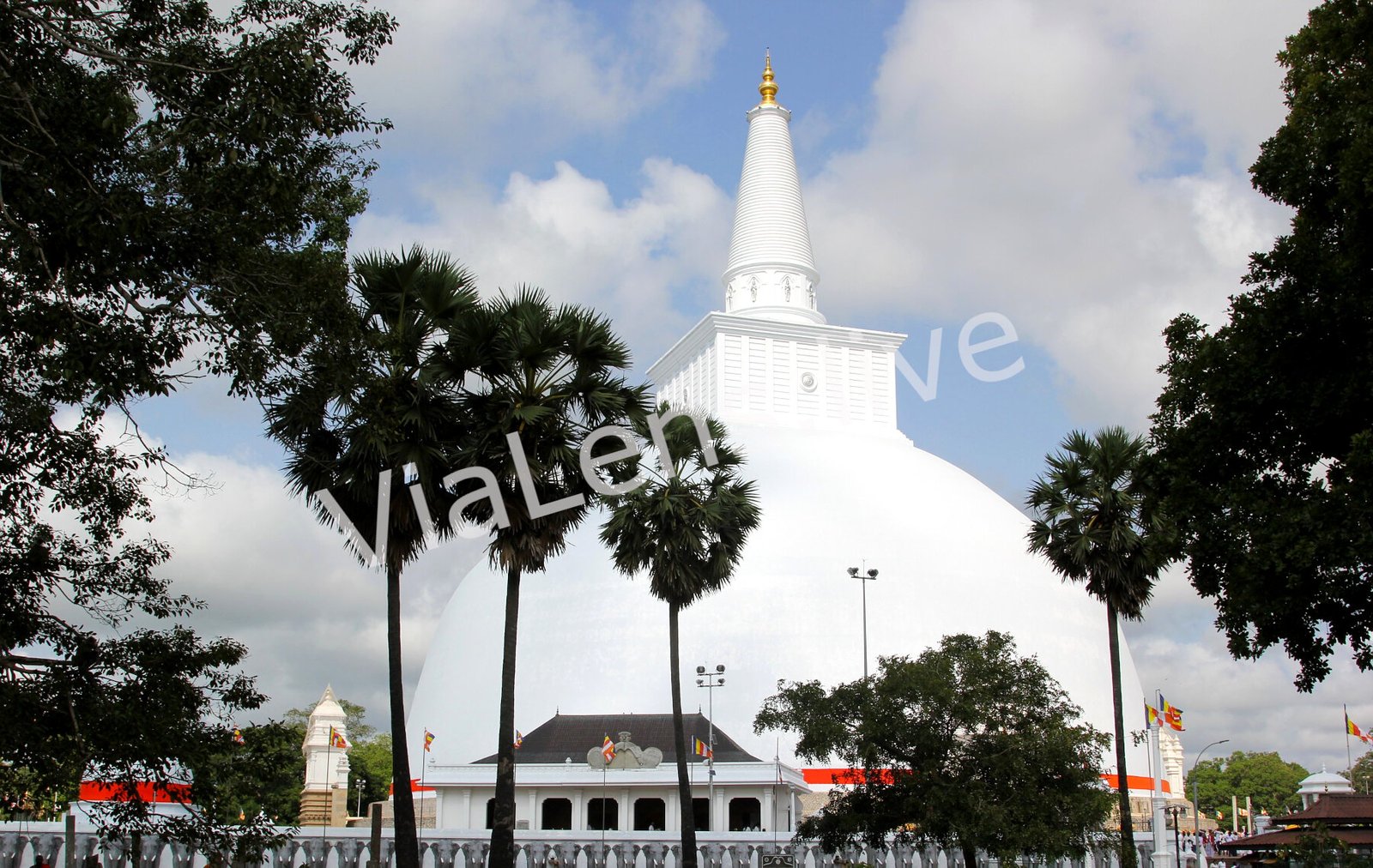
The Ruwanweli Maha Seya
Maha Thupa
Country: Sri Lanka
Date: 2023
Place: Anuradhapura
Built around 140 BC
Classical Sinhalese Buddhist Stupa (Dagoba) architecture style
!UNESCO World Heritage Site. The stupa is one of the world's tallest ancient monuments, standing at 103 m and with a circumference of 290 m.
Two quarts or one Dona of the Buddha's relics are enshrined in the stupa, making it the largest collection of his relics anywhere. It was built by Sinhalese King Dutugemunu who became king of Sri Lanka.
Long Son Temple
Long Sơn temple
Country: Vietnam
Date: 2013
Place: Nha Trang
Founded in 1886 at a different site on Trai Thuy Hill
Traditional Eastern Asian / Vietnamese Buddhist style
Designed by Superior Monk Thích Ngộ Chí
!In 1900 a severe cyclone damaged the original structure, prompting its relocation to its current position at the foothills of Trai Thuy Mountain.
Temple was erected on another hill in 1886 and after a large cyclone which destroyed the temple, the temple had to be moved from the hill to its current location.
Castle Chapel
Baroque Chapel at Valtice Castle
Country: Czech Republic
Date: 2022
Place: Valtice
Built between 1726 and 1729
High Baroque style
Designed by Antonio Beduzzi
!Part of the Lednice–Valtice Cultural Landscape UNESCO World Heritage Site.
An ornate Baroque chapel within the Valtice Castle complex. The richly decorated interior features marble-clad walls, ceiling frescoes, sculptures, and a black-and-white chequered floor typical of Central European Baroque architecture.
Maha Kali Amman Temple
Colourful Hindu Temple Tower
Country: Sri Lanka
Date: 2022
Place: Colombo
The foundation was laid in 1783
Dravidian architecture style
!One of Colombo’s best-known Hindu temples dedicated to Goddess Kali.
The richly decorated entrance tower of Maha Kali Amman Temple. The temple features a traditional South Indian-style gopuram covered with colourful sculptures depicting Hindu deities, guardians, and mythological figures.
Polwaththa Sri Gangarama Rajamaha Viharaya
Standing Buddha Shrine Hall
Country: Sri Lanka
Date: 2026
Place: Polwaththa
Believed to have been founded during the reign of Queen Kalyanavathi (1202–1208 AD)
Traditional Sinhalese & Kandyan style
Designed by or attributed to a general named Swaraja Kulawardhana Devadhikari as a founder
!A Rajamaha Viharaya with traditional Buddhist architecture and religious significance.
A beautifully decorated shrine hall featuring a long row of standing Buddha statues set within ornate niches. The temple displays traditional Sri Lankan Buddhist artwork, painted floral motifs, and devotional figures.
Lord Murugan Statue
Golden guardian of Batu Caves
Country: Malaysia
Date: 2026
Place: Batu Caves, Kuala Lumpur
Constructed between 2001 and 2006
Classic Dravidian architecture style
Designed by and built by a team of 15 specialized sculptors and artisans from India
!One of the tallest statues of Lord Murugan in the world and a major landmark of Malaysia. It's painted with 300 litres of gold paint.
The colossal golden statue of Lord Murugan stands at the entrance to Batu Caves. Rising over 42 metres high, it is one of the tallest Murugan statues in the world and serves as a symbol of the sacred Hindu pilgrimage site.
Hanuman Statue
Guardian of the Ramayana Cave
Country: Malaysia
Date: 2026
Place: Batu Caves, Kuala Lumpur
November 2001
South Indian / Hindu iconographi style
!The statue marks the entrance to the Ramayana Cave and is one of the most recognizable landmarks within the Batu Caves complex.
The towering 15-metre-tall statue of Hanuman stands at the entrance to the Ramayana Cave. The monkey deity is revered for his devotion, courage, and loyalty in the Hindu epic Ramayana.
Lord Vishnu and Divine Chariot
Mythological display at Batu Caves
Country: Malaysia
Date: 2026
Place: Batu Caves, Kuala Lumpur
Unveiled on 29th of January 2006
South Indian / Dravidian architecture style
Designed by and built by a team of 15 skilled sculptors from India led by master artisan Tiruvarur Thiagarajan
A colourful sculpture depicts Lord Vishnu standing beside a ceremonial chariot drawn by sacred horses. The display forms part of the religious storytelling installations surrounding the Ramayana Cave.
Ramayana Cave Pavilion
Entrance pavilion near Hanuman Shrine
Country: Malaysia
Date: 2026
Place: Batu Caves, Kuala Lumpur
Opened in January 1995
South Indian / Dravidian artistic and narrative storytelling style
!Part of the Batu Caves Hindu religious complex, one of the most important Hindu pilgrimage sites outside India.
This colourful pavilion stands near the entrance to the Ramayana Cave complex at Batu Caves. Decorated with richly painted columns, Hindu deities and mythological guardians, it serves as a ceremonial gathering space before visitors enter the cave. The architecture reflects South Indian temple traditions brought to Malaysia by Tamil communities.
Ramayana Diorama
Scenes from the Hindu epic
Country: Malaysia
Date: 2026
Place: Batu Caves, Kuala Lumpur
Opened in January 1995
Traditional South Indian / Dravidian narrative sculpture style
!The Ramayana Cave uses sculptures and displays to tell one of the most important stories in Hindu tradition with colorful LED lighting contrasting against the ancient 400-million-year-old natural limestone cave walls and stalactites.
Life-sized statues inside the Ramayana Cave depict scenes from the ancient Hindu epic, including the adventures of Lord Rama, the abduction of Sita, and the battle against Ravana.
Kumbhakarna Statue
The sleeping giant of the Ramayana
Country: Malaysia
Date: 2026
Place: Batu Caves, Kuala Lumpur
Opened in January 1995
Traditional South Indian / Dravidian narrative sculpture style
!Kumbhakarna is known in Hindu mythology for his immense size, strength, and legendary sleep.
A massive reclining statue represents Kumbhakarna, the giant brother of Ravana from the Hindu epic Ramayana. The colourful display is one of the most striking features within the Ramayana Cave.
Lord Ganesha Shrine
Guardian of wisdom and beginnings
Country: Malaysia
Date: 2026
Place: Batu Caves, Kuala Lumpur
Opened in January 1995
Traditional South Indian / Dravidian narrative sculpture style
A brightly illuminated shrine dedicated to Lord Ganesha sits within the limestone chambers of the Ramayana Cave. The elephant-headed deity is revered as the remover of obstacles and patron of wisdom and learning.
Sri Velayuthar Temple
Main shrine inside Temple Cave
Country: Malaysia
Date: 2026
Place: Batu Caves, Kuala Lumpur
Founded in 1891
Dravidian Architecture style
!Temple Cave is the principal worship area of Batu Caves and the focal point of the annual Thaipusam festival, which attracts hundreds of thousands of devotees.
The Sri Velayuthar Temple stands within the vast limestone chambers of Batu Caves’ Temple Cave. Surrounded by towering rock walls and natural skylights, the shrine forms the spiritual heart of the complex and is dedicated to Lord Murugan, the Hindu god of war and victory. Pilgrims and visitors ascend the famous rainbow staircase before entering this sacred cavern.
Temple Cave Gopuram
Colourful shrine tower beneath limestone cliffs
Country: Malaysia
Date: 2026
Place: Batu Caves, Kuala Lumpur
Founded in 1891
Dravidian Architecture style
!The limestone caves are estimated to be around 400 million years old, making them among the oldest natural formations in Malaysia.
An elaborately decorated gopuram rises beneath the immense limestone ceiling of Temple Cave. Covered with colourful carvings of Hindu deities, guardians and sacred symbols, the tower marks one of the principal shrine entrances within the cave. The contrast between intricate temple architecture and the natural cavern walls creates one of Batu Caves’ most striking views.
Cave Villa Eagle Monument
Cultural attraction at Batu Caves
Country: Malaysia
Date: 2026
Place: Batu Caves, Kuala Lumpur
Dravidian Architecture style
!Cave Villa was developed as a cultural and educational extension of Batu Caves, showcasing Hindu mythology, local heritage and artistic displays.
A large eagle monument stands beside one of Batu Caves’ cultural exhibition areas known as Cave Villa. The attraction combines Hindu-inspired artwork, educational displays and landscaped pathways beneath the dramatic limestone cliffs. The eagle sculpture provides a distinctive landmark within this lesser-known section of the Batu Caves complex.
Ramayana Cave Passage
Illuminated limestone corridor
Country: Malaysia
Date: 2026
Place: Batu Caves, Kuala Lumpur
Opened in January 1995
Traditional South Indian / Dravidian narrative sculpture style
!The Ramayana Cave presents the story of Lord Rama through a series of sculptures, murals and displays housed within limestone formations estimated to be hundreds of millions of years old.
A dimly lit passage winds through the natural limestone chambers of the Ramayana Cave. Coloured lighting highlights the cave walls while guiding visitors through scenes depicting episodes from the Hindu epic Ramayana.
Guan Di Temple
Temple of the Green Emperor
Country: Malaysia
Date: 2026
Place: Kuala Lumpur
Built in 1887
Lingnan architectural style
!One of the oldest temples in Malaysia.
A colourful Chinese temple dedicated to Guan Di, the deified general Guan Yu. The red façade, green tiled roof, dragon ornaments, lanterns, and guardian figures show traditional Chinese temple design.
Cheng Hoon Teng Temple Entrance
Historic Chinese temple gateway
Country: Malaysia
Date: 2026
Place: Melaka
Founded in 1645
Traditional Southern Fujian (Hokkien) Chinese temple architecture style
!Cheng Hoon Teng is widely regarded as the oldest functioning Chinese temple in Malaysia.
The richly decorated entrance of Cheng Hoon Teng Temple, with carved roof ridges, dragon motifs, lanterns, and painted guardian figures. The entrance reflects the craftsmanship and layered detail of traditional Chinese temple architecture.
Cheng Hoon Teng Prayer Hall
Main temple hall
Country: Malaysia
Date: 2026
Place: Melaka
Founded in 1645
Traditional Southern Fujian (Hokkien) Chinese temple architecture style
!One of Malaysia’s most important historic Chinese temples.
The main prayer hall of Cheng Hoon Teng Temple, showing curved rooflines, red lanterns, painted beams, altar space, and traditional Chinese decorative elements. The temple remains an important place of worship in Melaka.
Cheng Hoon Teng Stage
Main temple hall
Country: Malaysia
Date: 2026
Place: Melaka
Traditional Southern Fujian (Hokkien) Chinese temple architecture style
!Built as a traditional open-air or roofed stage to host Chinese traditional opera performances (such as Teochew or Hokkien opera).
This Cheng Hoon Teng Stage is located on opposite site from the main temple.
St. Paul's Church Ruins
Historic church on St. Paul's Hill
Country: Malaysia
Date: 2026
Place: Melaka
Originally built in 1521 as a small chapel
Portuguese Colonial / European Vernacular style
Designed by and constructed originally by sea captain Duarte Coelho
!One of Melaka’s best-known colonial religious landmarks and part of the UNESCO World Heritage historic city area.
The roofless ruins of St. Paul's Church show weathered stone walls, arched windows, old tombstones, and views across Melaka. The church was originally built during the Portuguese period and later used during Dutch rule. Rebuilt and enlarged between 1566 and 1590.
St. Paul's Church Interior
Interior ruins of St. Paul`s Church
Country: Malaysia
Date: 2026
Place: Melaka
Originally built in 1521 as a small chapel
Portuguese Colonial / European Vernacular style
Designed by and constructed originally by sea captain Duarte Coelho
!Part of the UNESCO-listed Historic City of Melaka and one of the oldest surviving church structures in Southeast Asia.
The surviving interior walls of St. Paul's Church reveal the weathered laterite stone and brick construction of one of Southeast Asia's oldest European church sites. It's a reminder of Melaka's colonial and religious history.
St. Paul's Church Lighthouse
Church ruins and hilltop beacon
Country: Malaysia
Date: 2026
Place: Melaka
Constructed in 1849
Neoclassical style
!Part of the St. Paul’s Hill heritage complex in UNESCO-listed Melaka.
The white lighthouse structure and St. Francis Xavier statue stand within the St. Paul’s Church ruins. The hilltop site combines religious, maritime, and colonial history above the old port city.
Xiang Lin Si Temple
Traditional Chinese temple on Jalan Tokong
Country: Malaysia
Date: 2026
Place: Melaka
Built in 1958
Modern Chinese Temple architecture style
!Jalan Tokong, also known as Harmony Street, is famous for housing places of worship from several faiths within a short walking distance.
This late-20th-century structure balances traditional elements (such as tiered sweeping tile roofs, ornate eaves, and guardian stone lions) with a contemporary multi-level layout, grand archway entries, and structural concrete balconies.
San Duo Temple
Historic Chinese temple complex
Country: Malaysia
Date: 2026
Place: Melaka
Originally built in 1795
Chinese Taoist/folk temple style
!One of the many historic Chinese religious sites that contribute to Melaka's UNESCO World Heritage cultural landscape.
The San Duo Temple is a traditional Chinese religious complex featuring ornate roof decorations, curved ridgelines, carved stone guardians and richly decorated prayer halls.
Buddhist Stupa
Roadside Buddhist shrine
Country: Sri Lanka
Date: 2026
Place: Colombo
Completed in 2007
Traditional Sri Lankan Bell-shaped (Ghantakara) stupa style
!Built by well-known local philanthropist Deshabandu Mudalali
A white Buddhist stupa accompanied by a gold-painted seated Buddha image. The compact urban shrine combines the traditional bell-shaped stupa form with a Buddha statue in meditation posture.
New addition
Basilica of Maria Taferl
Baroque pilgrimage basilica above the Danube
Country: Austria
Date: 2025
Place: Maria Taferl, Lower Austria
Built between 1660 and 1710
Baroque style
Designed by Georg Gerstenbrand, Carlo Lurago, Jakob Prandtauer
!Its richly decorated interior featuring rich gold leaf, illusionistic ceiling frescoes by Antonio Beduzzi, and gilded stucco
The twin-towered basilica overlooks the Danube valley and has been a major Austrian Marian pilgrimage destination since the seventeenth century.
New addition
Zlatá Koruna Monastery — Church
Gothic monastery church
Country: Czech Republic
Date: 2022
Place: Zlatá Koruna, South Bohemia
Built started around 1280
High Gothic with Early Baroque and Rococo interior modifications style
Designed by Michal Parléř
!Founded in 1263 by King Přemysl Otakar II, Zlatá Koruna is one of the important surviving medieval monastic complexes in the Czech Republic.
The tall Gothic façade and pointed windows belong to the former Cistercian monastery at Zlatá Koruna, near Český Krumlov.
New addition
Zlatá Koruna Monastery — Chapel
Historic chapel within the monastery complex
Country: Czech Republic
Date: 2022
Place: Zlatá Koruna, South Bohemia
Built around 1370
Gothic style
!The monastery complex includes medieval chapels and monastic buildings that preserve elements of its Cistercian history.
A modest pink-plastered medieval religious building stands within the historic grounds of Zlatá Koruna Monastery.
New addition
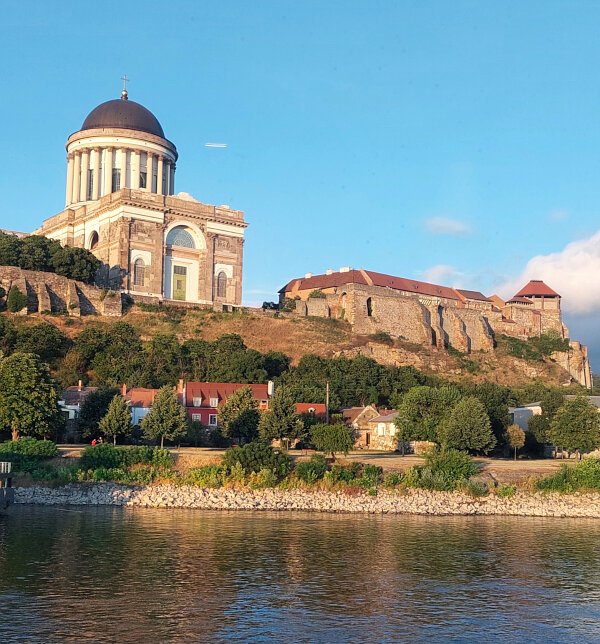
Esztergom Basilica
Monumental cathedral overlooking the Danube
Country: Hungary
Date: 2025
Place: Esztergom, Hungary
Built between 1822 and 1869
Neoclassical style
Designed by Pál Kühnel, József Hild after 1839
!The Basilica of the Assumption and Saint Adalbert is Hungary's largest church and the seat of the Archbishop of Esztergom-Budapest.
The great domed basilica dominates the hill above the Danube, beside the historic castle complex of Esztergom. Featuring the historic Bakócz Chapel (early 16th-century Tuscan Renaissance red-marble side chapel).
New addition
St. Stephen's Basilica
Grand domed Roman Catholic basilica
Country: Hungary
Date: 2025
Place: Budapest, Hungary
Built between 1851 and 1905
Neoclassical and Neo-Renaissance style
Designed by József Hild, Miklós Ybl, József Kauser
!The basilica is dedicated to Hungary's first king, Stephen I, and traditionally houses the relic known as the Holy Right Hand. The dome is 96 m height.
The symmetrical façade, twin bell towers and great central dome of St. Stephen's Basilica are among Budapest's most recognisable landmarks.
New addition
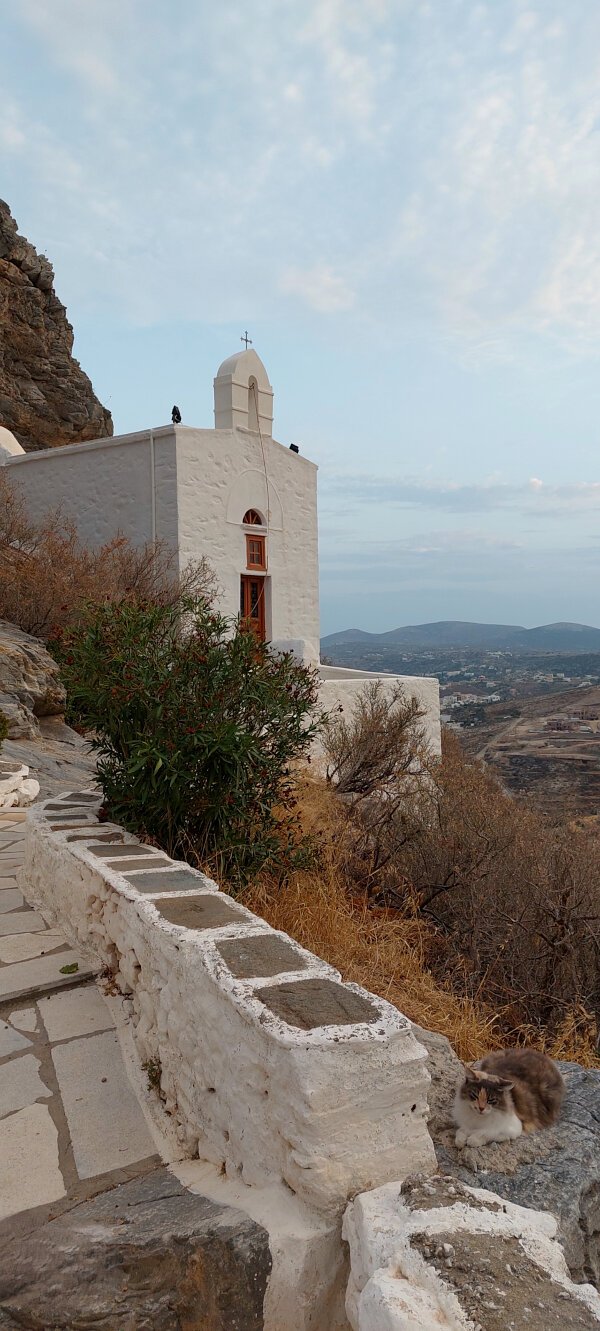
Chapel of Saint Michael
Traditional Greek Orthodox hillside chapel
Country: Greece
Date: 2023
Place: Ano Syros, Syros
Estimated late 17th century
Traditional Medieval-Cycladic Vernacular style
!Whitewashed chapels are characteristic of the Cyclades, where lime-based coatings traditionally helped protect masonry and reflect intense Mediterranean sunlight.
A small whitewashed chapel stands against a rocky hillside overlooking the dry landscape of Syros. Its simple stone construction, modest bell gable and wooden entrance reflect the traditional religious architecture of the Cycladic islands. The surrounding landscape and distant hills emphasise the chapel's peaceful, isolated setting.
New addition
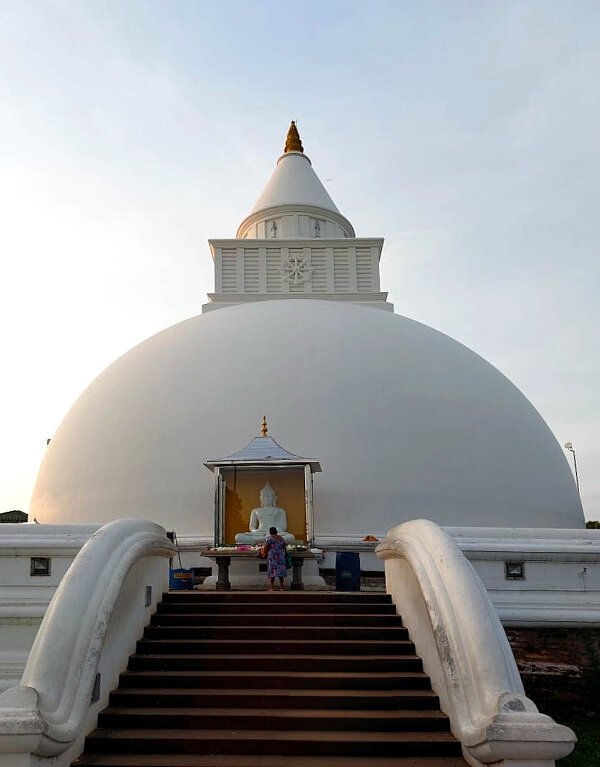
Kiri Vehera, Kataragama
Historic white Buddhist stupa
Country: Sri Lanka
Date: 2023
Place: Kataragama, Southern Province, Sri Lanka
Dates back to the 3rd century BCE
Ancient Sri Lankan Stupa style
!Kiri Vehera is traditionally associated with the reign of King Mahasena and is counted among Sri Lanka’s important Buddhist pilgrimage sites. Kataragama is especially notable as a sacred destination visited by Buddhists, Hindus and other religious communities.
The enormous white dome of Kiri Vehera rises above the entrance steps and a small Buddha shrine. Located near the sacred Kataragama pilgrimage complex, this Buddhist stupa is an important place of worship where devotees offer flowers, light oil lamps and practise religious observances.
New addition
Kelaniya Raja Maha Vihara Stupa
Sacred white stupa at Kelaniya Temple
Country: Sri Lanka
Date: 2023
Place: Kelaniya, Western Province, Sri Lanka
The origin of the site backed to 5th century BCE
Dhanyakara style
!According to Sri Lankan Buddhist tradition, the Buddha visited Kelaniya during his third journey to the island, traditionally dated to the eighth year after his enlightenment. The temple is one of Sri Lanka's most revered Buddhist sites and is also famous for its paintings by artist Solias Mendis and the annual Duruthu Perahera.
The large white stupa at Kelaniya Raja Maha Vihara dominates the temple grounds beneath a cloudy sky. Its broad dome and tapering spire are characteristic of Sri Lankan Buddhist architecture, symbolising spiritual devotion and the preservation of Buddhist religious traditions.
New addition
Nallur Kandaswamy Kovil
Ornate Tamil Hindu temple architecture
Country: Sri Lanka
Date: 2024
Place: Jaffna, Northern Province, Sri Lanka
Founded in 948 CE
Dravidian (Late Dravidian Renaissance / Tamil) style
!Hindu temples in Jaffna are important centres of Tamil religious life. Their gopurams are decorated with representations of Hindu deities and mythological figures. The region is particularly associated with the worship of Lord Murugan, also known as Skanda or Kartikeya.
A richly decorated Hindu temple displays elaborate golden ornamentation, sculpted columns and traditional Dravidian architectural features. The entrance pavilion and towering gopuram reflect the strong Tamil Hindu religious and cultural heritage of northern Sri Lanka.
New addition
Japanese Peace Pagoda
Buddhist monument dedicated to world peace
Country: Sri Lanka
Date: 2025
Place: Unawatuna, Southern Province
Built between 2004 and February 23, 2005
Japanese white Mahayana Buddhist stupa/dome style
!The Unawatuna Peace Pagoda was constructed by the Japanese Buddhist Nipponzan-Myōhōji movement, founded by Nichidatsu Fujii, which promotes peace and non-violence through the construction of Peace Pagodas around the world.
The white Japanese Peace Pagoda rises above the coastal hills of Rumassala near Unawatuna. Its rounded dome, tiered base and slender spire create a peaceful architectural landmark, while a small Buddha statue occupies a niche along the approach. The pagoda provides a place for meditation and reflection overlooking the southern coast.
New addition
Mahamevnawa Buddhist Monastery
Ornate Buddhist shrine with white stupas
Country: Sri Lanka
Date: 2026
Place: Ella
Construction began in 2007 and finished in August 2024
Traditional Theravāda Buddhist architectural style
!The Mahamevnawa Buddhist Monastery movement was founded in 1999 by Ven. Kiribathgoda Gnanananda Thero. It follows the Theravada Buddhist tradition and places particular emphasis on studying and practising the teachings preserved in the Pali Canon. The movement has established monasteries and meditation centres in Sri Lanka and internationally.
An elaborately decorated Buddhist shrine features a large white central stupa surrounded by smaller stupas, golden ornamental borders and carved wooden doors. The combination of traditional Buddhist symbolism and richly detailed modern craftsmanship reflects the continuing importance of religious architecture in Sri Lanka.