A collection of ruin photographs from the archive.
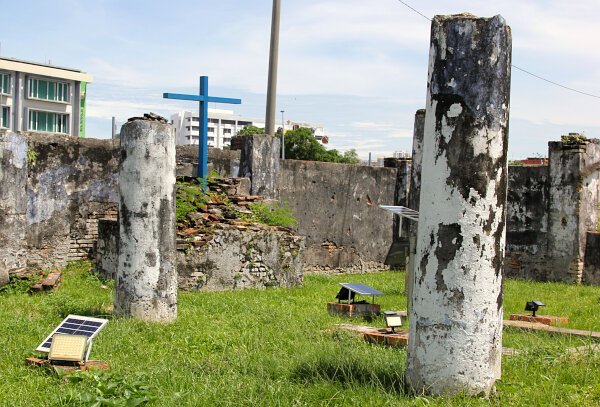
St. Lawrence's Chapel Ruins
Remains of a Portuguese-era chapel
Country: Malaysia
Date: 2026
Place: Melaka
Built around 1549–1613
Portuguese colonial religious architecture style
!One of the few surviving traces of Portuguese colonial Melaka.
The surviving foundations and walls of St. Lawrence's Chapel, a small Portuguese religious structure that once stood within the fortified settlement of Melaka.
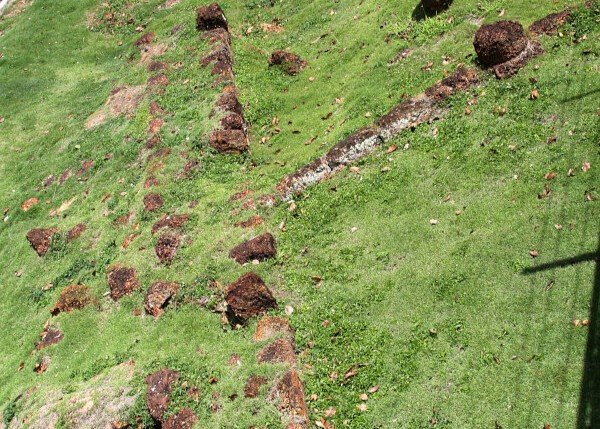
Middelburg Bastion
Dutch fortress remains
Country: Malaysia
Date: 2026
Place: Melaka
Built in 1660
Dutch colonial military architecture style
Designed by and built by Dutch East India Company
!Built by the Dutch as part of the fortress of Melaka. The bastion formed an important section of the city's defensive walls.
Stone foundations and defensive remains of the Middelburg Bastion, located at the northern tip of the former Portuguese and Dutch fortifications overlooking the Melaka River.
New addition
Aggstein Castle Ruins
Medieval castle perched high above the Wachau Valley
Country: Austria
Date: 2025
Place: Aggstein
Built on a rocky ridge in 12th century
Spearheaded the original early medieval layout, Late Gothic, Renaissance style
Designed by The Kuenrings (12th century), Jörg Scheck von Wald (1429), Imperial Engineers (1531)
!Aggstein Castle is associated with the Kuenring noble family and the castle lord Jörg Scheck von Wald. According to local legend, prisoners were confined on a narrow rocky ledge known as the Rosengärtlein, or Little Rose Garden.
The medieval ruins of Aggstein Castle rise dramatically from a rocky ridge overlooking the Danube. The fortress occupies a commanding position approximately 300 metres above the river. Its surviving towers, defensive walls and courtyards reflect centuries of military history in the Wachau Valley.
New addition
Goat Tower - Mikulov
Medieval stone tower overlooking Mikulov
Country: Czech Republic
Date: 2022
Place: Mikulov
Built in the 15th century
Late Gothic style
!Kozí hrádek was constructed as an artillery and observation tower, helping strengthen the defences of Mikulov Castle and its surrounding settlement.
The surviving stone tower of Kozí hrádek stands on a rocky hill above the historic town of Mikulov. Built as part of the medieval defensive system, the tower provided an elevated lookout over the surrounding countryside. Its weathered stone and brick walls remain a distinctive feature of the town skyline.
New addition
Ruined Stone Windmill Interior
Roofless circular stone tower with historic window openings
Country: Czech Republic
Date: 2022
Place: Pricovy
Built around the 1710s–1740s
Dutch-type cylindrical tower windmill style
!Historic windmills converted the energy of wind into mechanical motion to grind grain into flour. Stone tower mills commonly housed their machinery across several internal levels.
The interior of a ruined stone windmill reveals its circular masonry walls, small window openings and exposed structure. With the roof and original milling machinery no longer present, the surviving stone shell offers a glimpse into the construction of traditional wind-powered grain mills.
New addition
Burg Werfenstein
Medieval castle above the Danube
Country: Austria
Date: 2025
Place: Struden
Built most likely between 1200–1217
Medieval Romanesque/Gothic fortress style
!The castle once helped control river traffic through the Strudengau, where rocks and currents made navigation hazardous.
The stone towers of Werfenstein Castle stand on a rocky outcrop above the Danube near the historically dangerous Strudengau river passage.
New addition
Janův hrad (John’s Castle)
Romantic artificial castle ruin
Country: Czech Republic
Date: 2022
Place: Lednice-Valtice Cultural Landscape
Built between 1801–1808
Gothic Revival / Romanticism style
Designed by Joseph Hardtmuth
!Built for the Liechtenstein family.
John’s Castle is a picturesque hunting lodge deliberately designed to resemble a ruined medieval fortress, beside water and parkland.
New addition
Visegrád Citadel
Hilltop medieval fortress above the Danube Bend
Country: Hungary
Date: 2025
Place: Visegrád
Built between 1246 and 1251
Medieval Gothic (with earlier Romanesque foundations and later Renaissance/Late Gothic additions from the 14th to 15th centuries) style
!The fortress became an important royal stronghold; the Hungarian royal crown was kept here during parts of the medieval period.
The remains of the Visegrád Citadel extend across a wooded hilltop overlooking the Danube Bend.